

Janmashtami Vrat: Fasting Rules, Foods, Timing & Parana
Janmashtami vrat is an important part of the festival for many devotees. Some observe a strict fast, while others follow a lighter fasting practice based on their family tradition, health and religious observance.
Because fasting customs differ across regions and traditions, there is no single set of rules followed by every devotee.
This guide explains common Janmashtami fasting practices, foods, timing and ways the fast may traditionally be broken.
Important: Fasting is not suitable for everyone. Children, pregnant people, older adults and people with medical conditions or specific dietary needs should not undertake restrictive fasting without appropriate professional guidance.
Why Do Devotees Fast on Janmashtami?
Fasting is traditionally understood as a form of religious observance and self-discipline.
For many devotees, the vrat is an opportunity to focus on prayer, devotion and remembrance of Krishna rather than on food.
The nature of the fast varies significantly between families and communities.
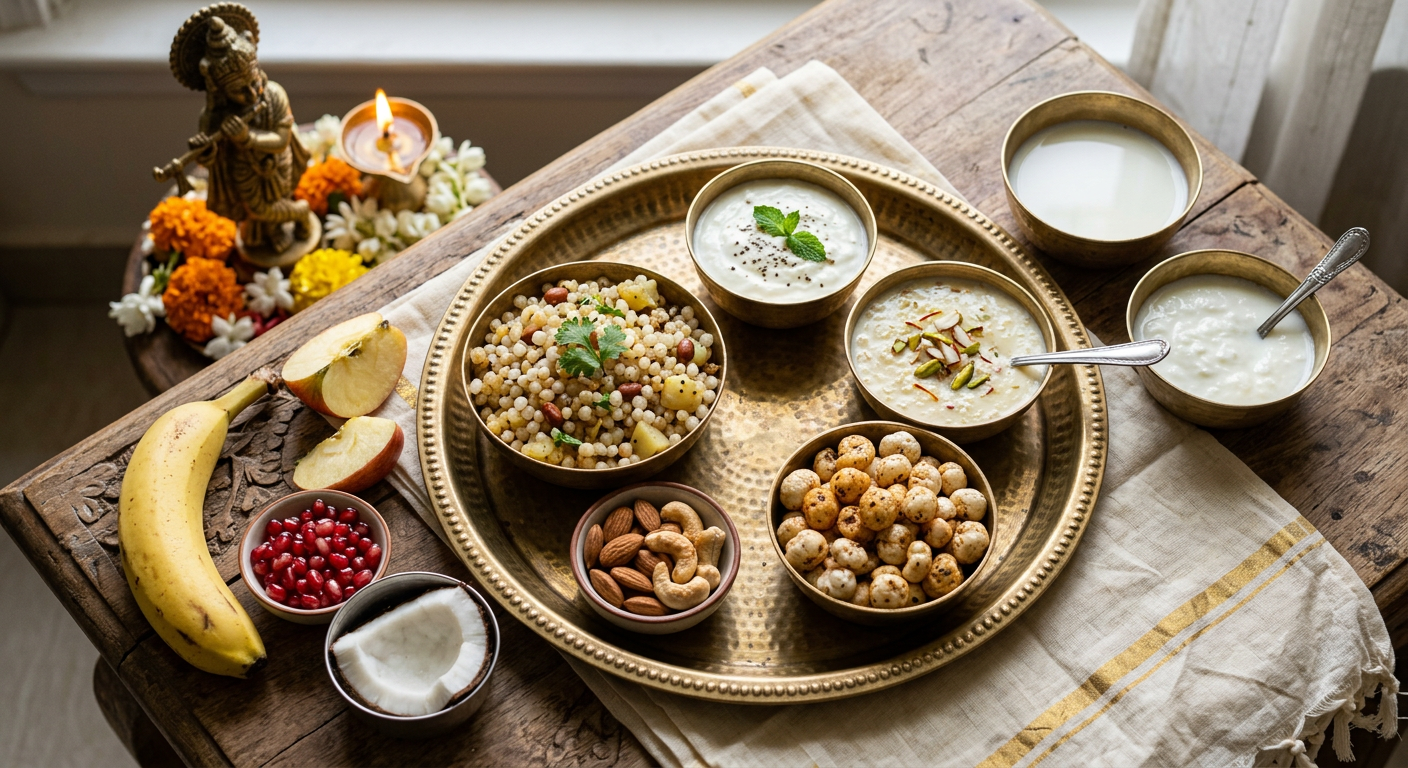
Types of Janmashtami Fasting
Phalahar
Some devotees consume fruits, milk and foods permitted under their fasting tradition.
Partial Fast
Others avoid certain foods, such as regular grains, while eating permitted fasting foods.
Nirjala Fast
Some devotees traditionally observe a nirjala fast, abstaining from food and water for a period.
This is a more restrictive practice and is not appropriate for everyone.
What Can You Eat During Janmashtami Vrat?
Foods permitted during fasting vary by regional and family tradition.
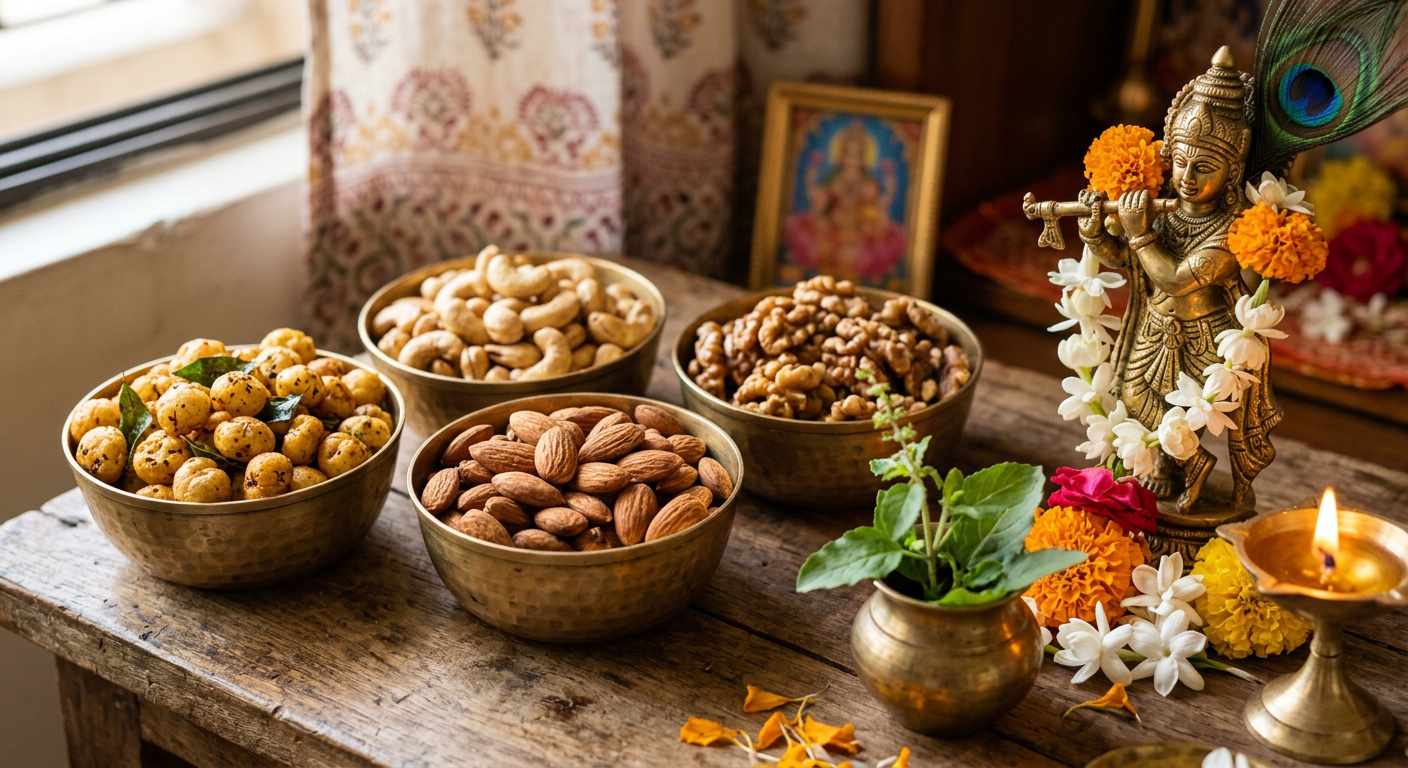
Commonly used foods may include:
Fruits
Milk
Curd
Makhana
Nuts
Coconut
Potatoes
Sweet potato
Certain fasting flours
Rock salt, where traditionally permitted
Always follow the fasting rules of your own tradition.
Popular Janmashtami Vrat Foods
Fruits
Fresh fruits are among the simplest options for a light fast.
Makhana
Makhana is commonly used in various fasting preparations.
Milk
Milk and milk-based preparations are used by some devotees during fasting.
Nuts
Almonds, cashews, walnuts and other nuts can be included according to individual fasting practice.
Potatoes and Root Vegetables
Some fasting traditions permit potatoes and other root vegetables.
Preparation methods vary.
Foods Commonly Avoided During Vrat
Depending on the tradition, devotees may avoid:
Regular grains
Certain pulses
Meat and eggs
Alcohol
Foods not permitted by their particular vrat rules
The exact list differs between traditions, so avoid presenting one regional practice as a universal rule.
When Does the Janmashtami Fast End?
The timing for ending the fast, or parana, varies according to the observance followed.
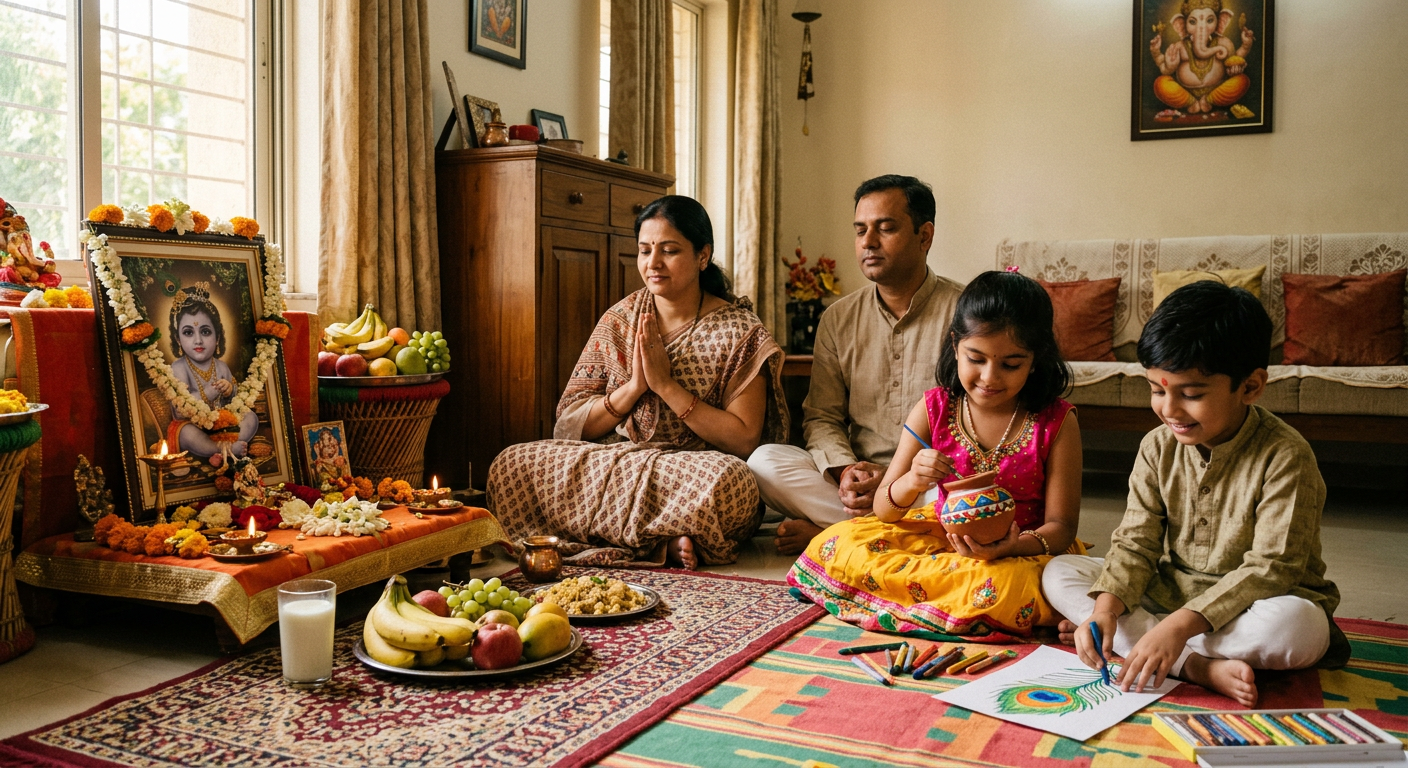
Some traditions connect the end of the fast with the completion of the appropriate Janmashtami observance, while others use specific Panchang calculations.
For this reason, check a reliable local Panchang for the exact 2026 parana timing.
Why Is Midnight Important?
Krishna's birth is traditionally associated with midnight.
Many devotees therefore continue their vrat until the prescribed time associated with the Janmashtami observance and participate in midnight worship.
The exact rules depend on the tradition being followed.
What Should You Eat After Breaking the Fast?
After a restrictive fast, many people prefer a simple meal rather than immediately eating a very heavy meal.

Depending on your tradition, this could include:
Fruit
Milk or curd
Light fasting foods
Simple home-cooked food after parana
Foods permitted by your family tradition
If you have dietary restrictions, follow your usual safe dietary practices.
Janmashtami Vrat for Children
Children do not need to follow the same fasting routine as adults.
Families can involve children in Janmashtami through:
Krishna stories
Bhajans
Puja
Decorating the jhula
Preparing bhog
Krishna-themed activities
If a child is fasting, follow appropriate parental and healthcare guidance.
Janmashtami Vrat for Older Adults
Older adults may have different nutritional and hydration needs.
A restrictive fast should not be undertaken simply because others in the family are fasting.
A person's health and dietary requirements should come first.
Simple Janmashtami Vrat Checklist
Decide which family/traditional fasting practice you will follow
Prepare permitted foods
Keep water and other required items available if your vrat permits them
Check the local Panchang
Note the midnight worship time
Check the parana timing
Prepare a simple meal for after the fast
Avoid restrictive fasting if it is unsuitable for your health
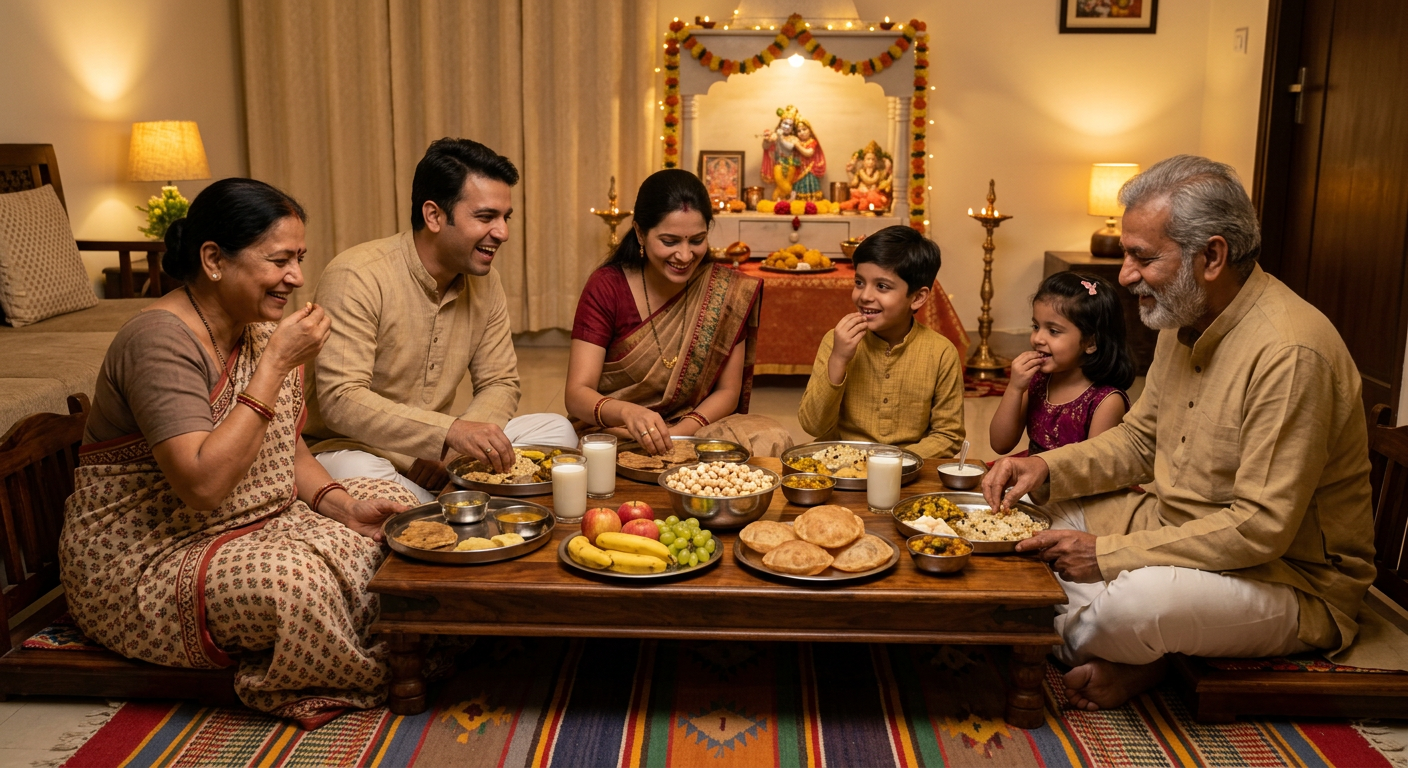
Final Thoughts
Janmashtami vrat is a personal religious observance, and practices vary widely.
Whether you observe a strict fast, a partial fast or simply participate in the prayers and celebrations, the festival can be approached with devotion while also respecting your health and individual circumstances.


