

Celebrating Krishna Janmashtami at home can be simple, peaceful and meaningful. While detailed puja procedures vary between traditions and families, a basic home worship setup can be adapted to suit your household.
This guide explains a simple Krishna puja vidhi for Janmashtami, from preparing the puja space to offering bhog and performing aarti.
For time-sensitive rituals such as midnight worship, always check the local Panchang followed in your area.
Before You Begin
Clean the puja area and keep all the required items ready.
A simple setup may include:
- Krishna idol or image
- Puja thali
- Diya
- Incense
- Camphor
- Flowers
- Tulsi
- Water
- Bhog
- Clean cloth
If your family follows a specific sampradaya or household puja procedure, follow that tradition.
Step 1: Clean and Prepare the Puja Space
Clean the area where Krishna will be worshipped.
Place a clean cloth or small altar platform.
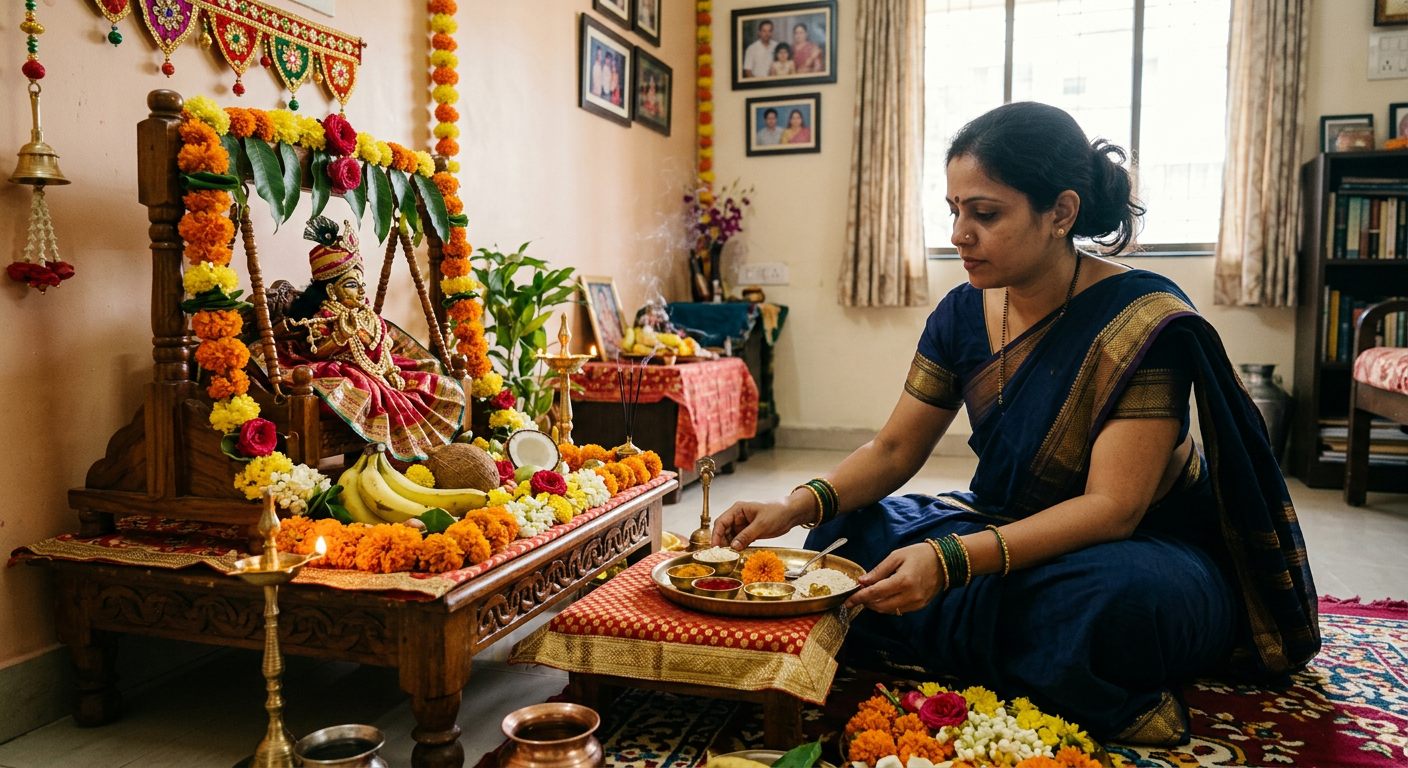
You can decorate the space with flowers, rangoli, a toran or a Krishna jhula.
Keep decorations away from flames.
Step 2: Place the Krishna Idol
Place the Krishna idol or image in the centre of the altar.
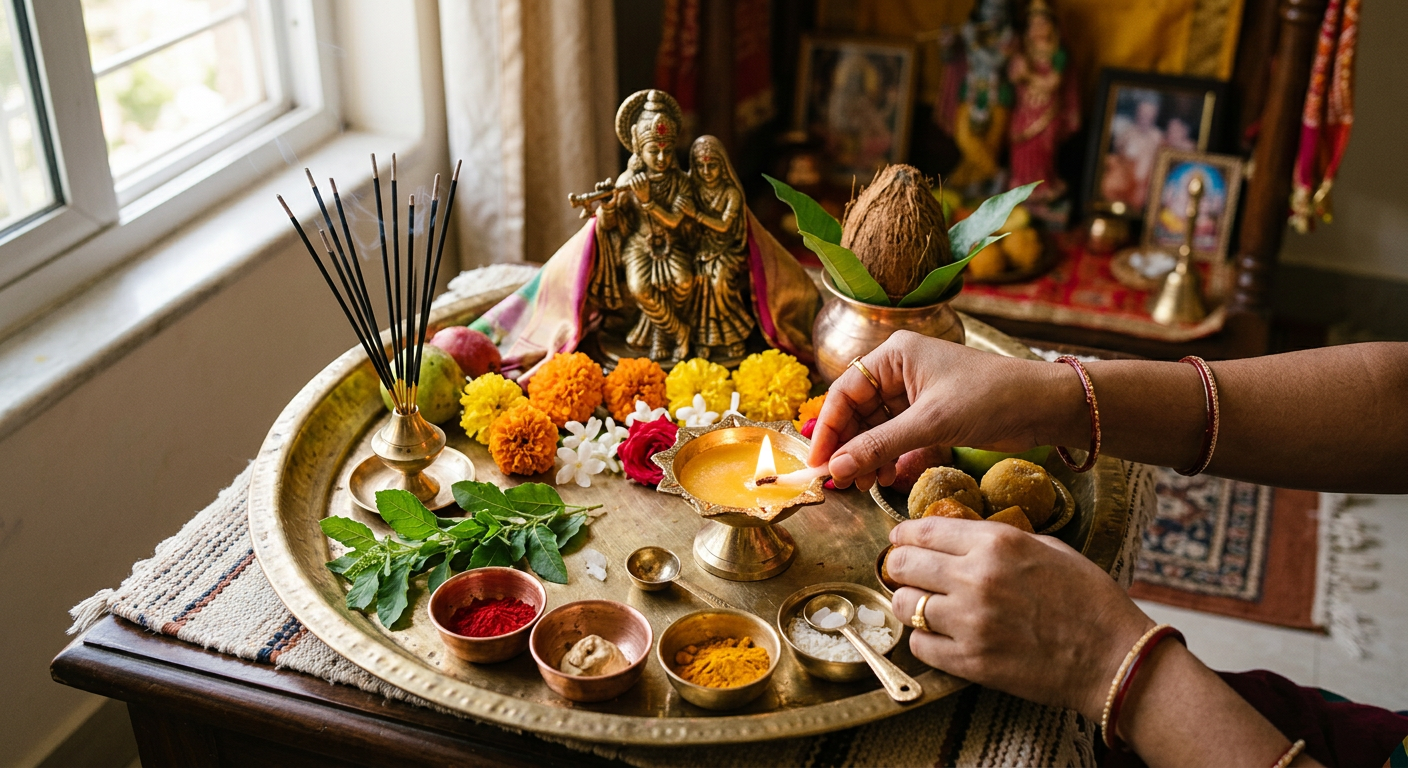
Families who traditionally worship Bal Krishna may place the deity in a decorated jhula.
Make sure the idol is positioned securely.
Step 3: Arrange the Puja Samagri
Place the puja thali and smaller items within easy reach.
Keep:
- Diya
- Incense
- Camphor
- Flowers
- Tulsi
- Water
- Bhog
- Aarti items
ready before beginning.
Step 4: Light the Diya
Light the diya as part of your worship.
A brass diya can be used for a traditional setup, while a clay diya is another common option.
Place it securely on a heat-resistant surface.
Step 5: Offer Flowers and Tulsi
Offer fresh flowers and Tulsi leaves according to your family's tradition.
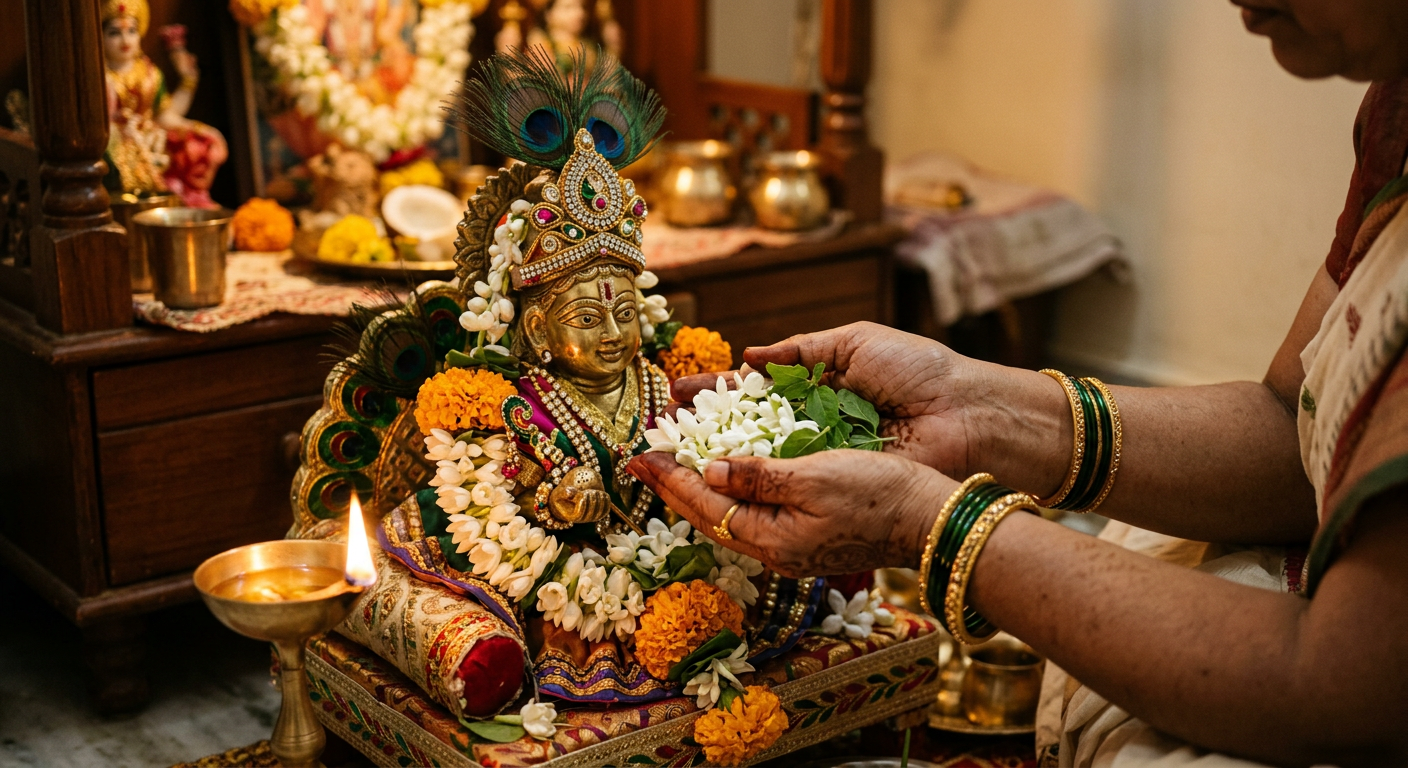
You can place them gently before the Krishna idol.
Step 6: Perform Your Prayer or Sankalp
Take a quiet moment to state your intention for the puja.
You may follow the prayer or sankalp traditionally used by your family.
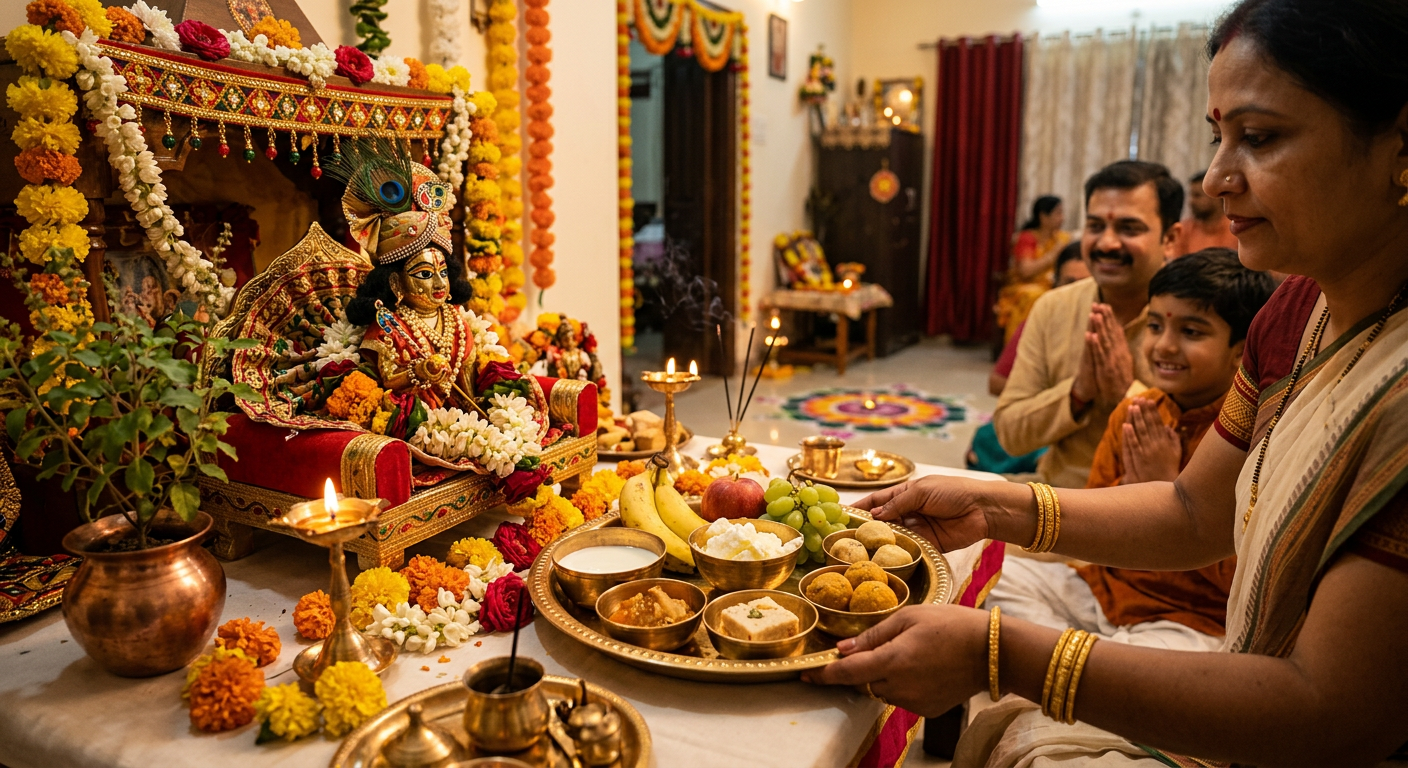
If you do not have a specific tradition, a simple heartfelt prayer is sufficient for a personal home celebration.
Step 7: Krishna Idol Worship
Families may perform different forms of worship depending on their tradition.
Some may ceremonially bathe the idol, dress it in clean clothes and decorate it with flowers and ornaments.
If you perform abhishekam, use a suitable setup that allows the idol and surrounding area to be cleaned afterwards.
Step 8: Offer Bhog
Prepare and offer food according to your family tradition.
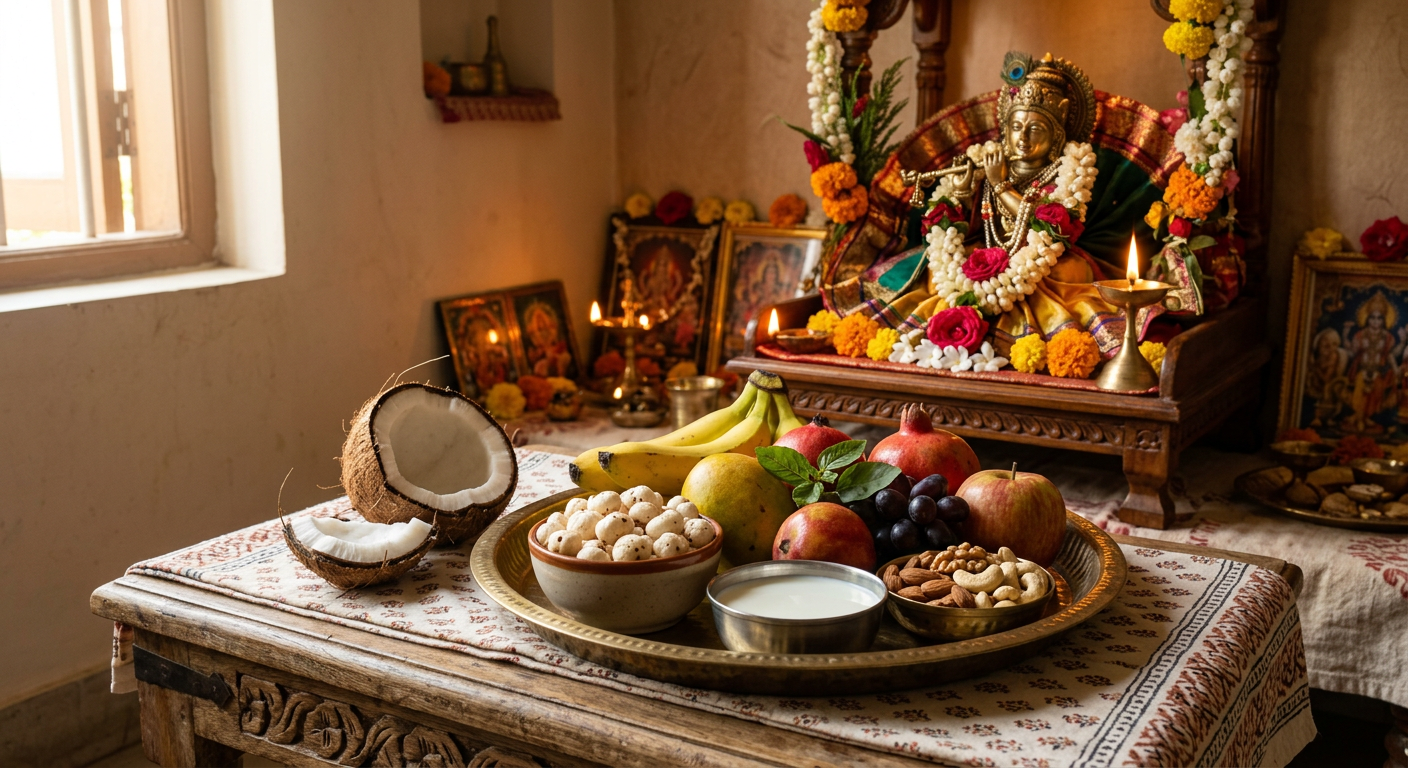
Popular offerings can include:
- Makhan-mishri
- Fruits
- Milk
- Panchamrit
- Sweets
After the offering, the food may be shared as prasad.
Step 9: Chant Krishna's Name or Sing Bhajans
You can chant Krishna's name, recite prayers or sing bhajans.
The purpose is to create a devotional atmosphere and spend time in remembrance of Krishna.
Step 10: Perform Aarti
Perform Krishna aarti according to your family tradition.
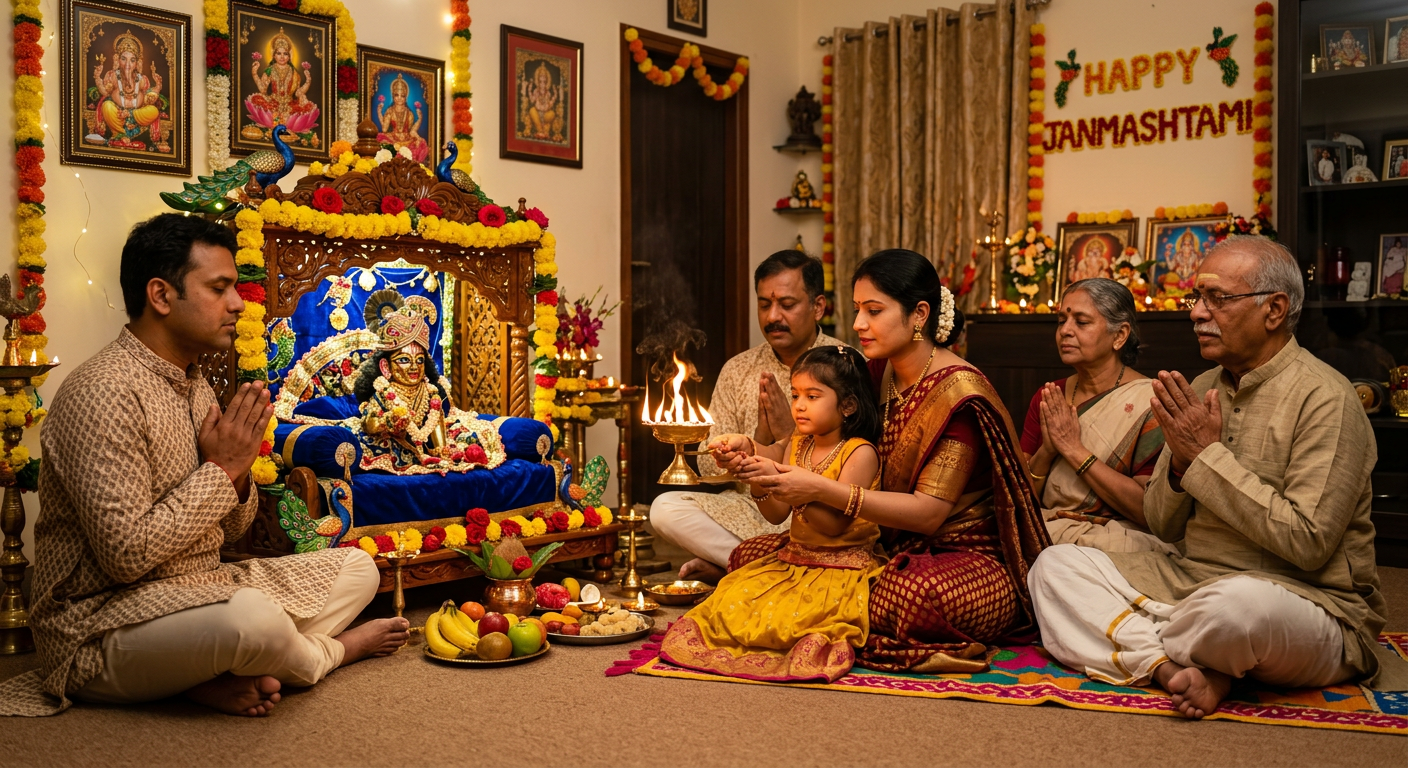
If camphor is used, handle the flame carefully and keep it away from clothing, flowers and decorative materials.
Step 11: Midnight Celebration
Many devotees observe the main Janmashtami worship around Nishita Kaal because Krishna's birth is traditionally associated with midnight.
The exact timing should be checked using a local Panchang.
At midnight, families may offer special prayers, perform aarti and celebrate Krishna's birth.
A Simple Krishna Puja Sequence
If you prefer a short puja, you can follow this structure:
Clean → Set up Krishna → Light diya → Offer flowers & Tulsi → Pray → Offer bhog → Aarti
This is suitable for families who want a simple home celebration while following their own traditions.
Should You Bathe the Krishna Idol?
Some Krishna worship traditions include bathing the deity with water or other ritual substances.
However, this is not something every household needs to perform.
If your family tradition includes abhishekam, prepare the required materials beforehand and use a clean, appropriate setup.
Should Krishna Be Placed in a Jhula?
A decorated Krishna jhula is a popular Janmashtami tradition, especially in celebrations centred around child Krishna.
It is optional, so families without a jhula can simply place the idol on a clean altar.
Common Mistakes to Avoid
Buying Too Many Items
A meaningful puja does not require a large collection of accessories.
Copying Another Family's Ritual Exactly
Puja traditions differ. Follow your household or community practice rather than assuming there is only one correct procedure.
Ignoring Fire Safety
Keep diyas, camphor and incense away from curtains, paper, fabric and children's reach.
Forgetting the Local Timing
Janmashtami observance depends on the lunar calendar. Check your local Panchang for Nishita Kaal and other time-sensitive details.
Final Thoughts
The beauty of a home Janmashtami celebration lies in making space for prayer, remembrance and family tradition.
You can keep the puja elaborate or simple. What matters is following your customs respectfully and creating a peaceful environment for the celebration.


