

Janmashtami Bhog: Traditional Foods & Offerings for Lord Krishna
Food has an important place in Indian festivals, and Krishna Janmashtami is no exception.
Many families prepare special bhog for Krishna and later share the offerings as prasad. The foods prepared for Janmashtami vary considerably across India, with each region and family adding its own traditions.
From makhan-mishri and fruits to Panchamrit and traditional sweets, you can create a simple offering without preparing an elaborate feast.
What Is Janmashtami Bhog?
Bhog refers to food offered to a deity as part of worship.
During Janmashtami, devotees prepare offerings for Krishna according to their family and regional traditions.
After the offering, the food may be distributed as prasad.
1. Makhan Mishri
Makhan-mishri is one of the offerings most closely associated with Krishna's childhood stories.
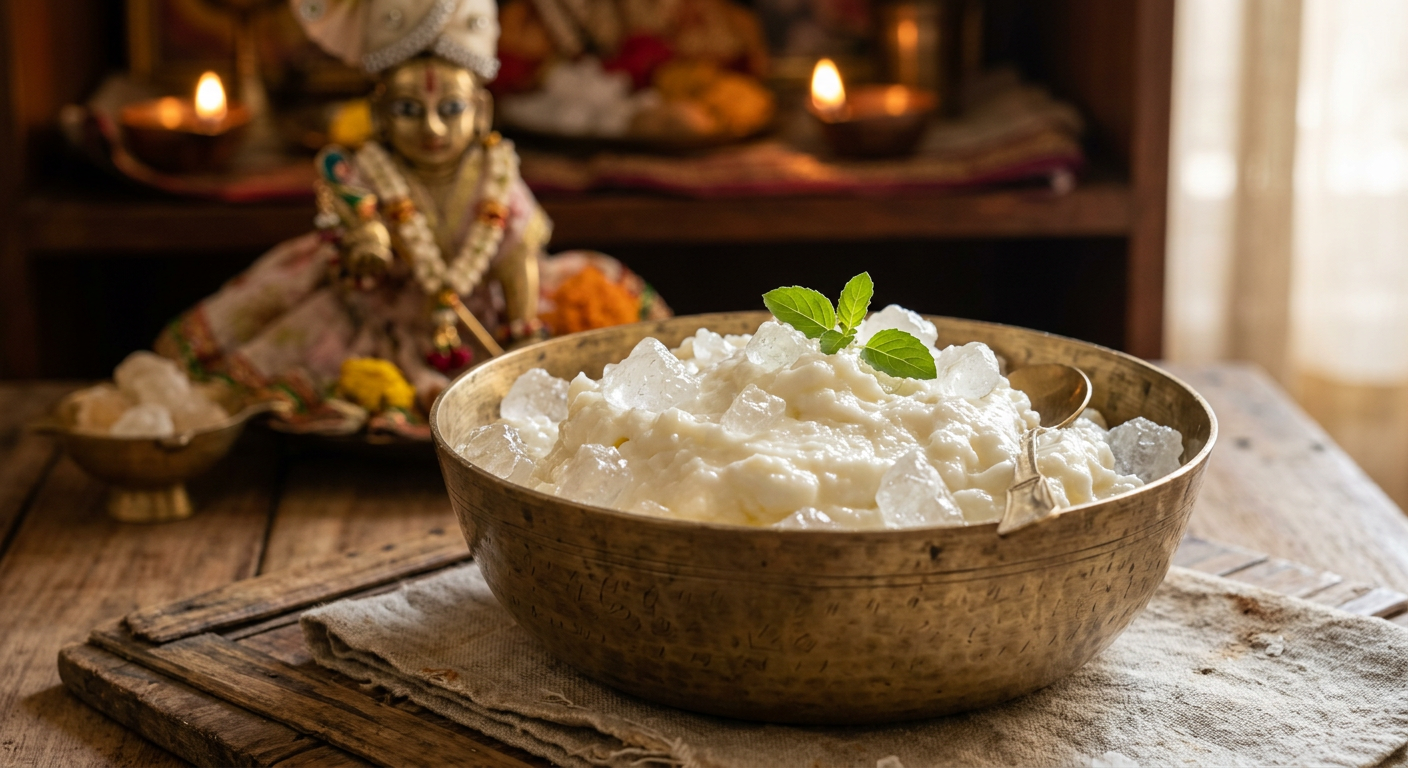
Butter represents the playful stories of Krishna's childhood, while mishri adds sweetness.
For a simple home offering, fresh makhan and mishri can be served in a clean bowl.
2. Panchamrit
Panchamrit is used in many Hindu ritual traditions.
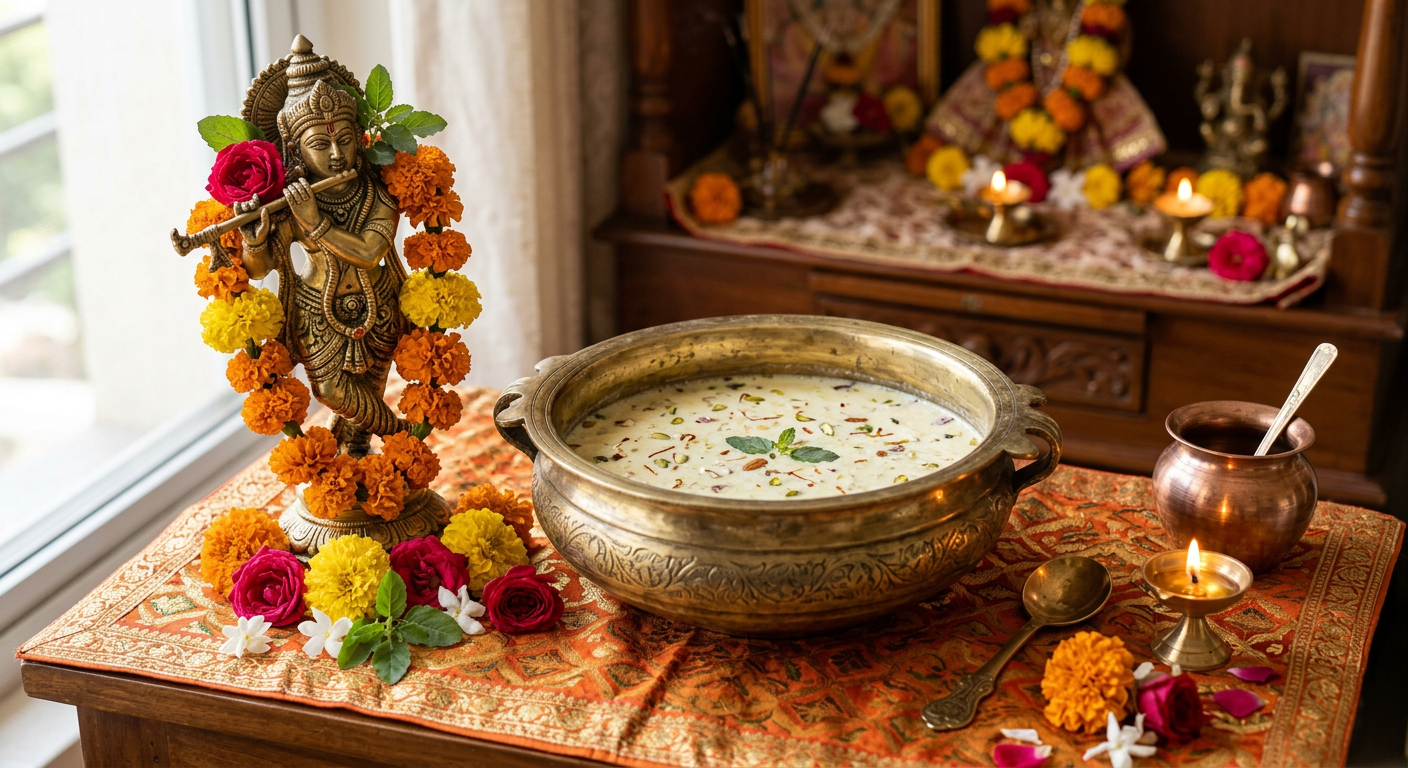
The exact ingredients and preparation can vary, but it is commonly associated with ingredients such as milk, curd, ghee, honey and sugar.
Follow the preparation traditionally used by your family.
3. Fresh Fruits
Fruits are an easy and versatile offering.
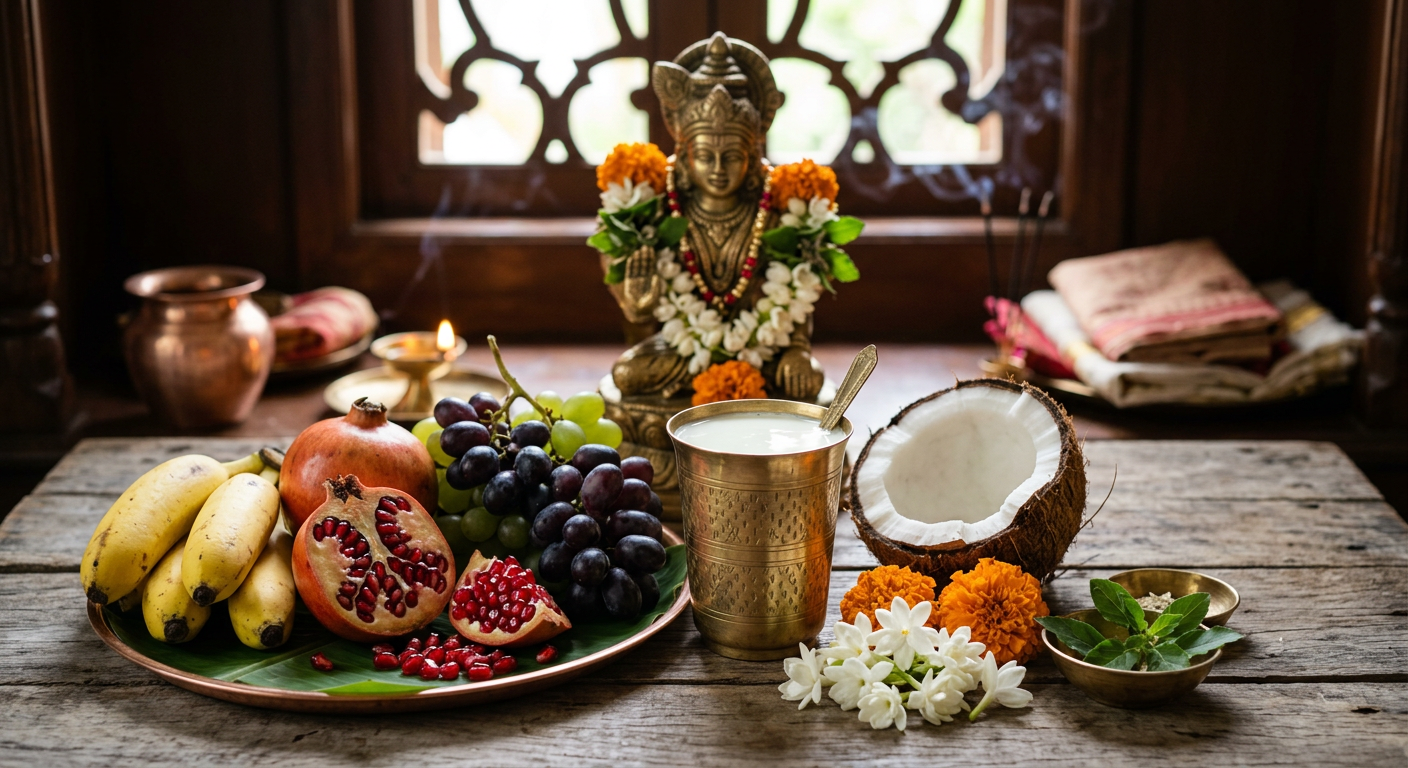
You can use seasonal fruits such as:
Bananas
Apples
Grapes
Pomegranate
Pears
Coconut
Wash and prepare them appropriately before offering.
4. Milk
Milk is commonly associated with Krishna's childhood stories and is used in many devotional offerings.
It can be offered simply or incorporated into other preparations.
5. Kheer
Kheer is a traditional milk-based sweet prepared in many Indian households.
Families may prepare rice kheer or other regional versions.
6. Panjiri
Panjiri and related preparations are used in some regional festival traditions.
Ingredients and preparation methods vary.
7. Traditional Indian Sweets
Depending on regional customs, families may prepare or offer:
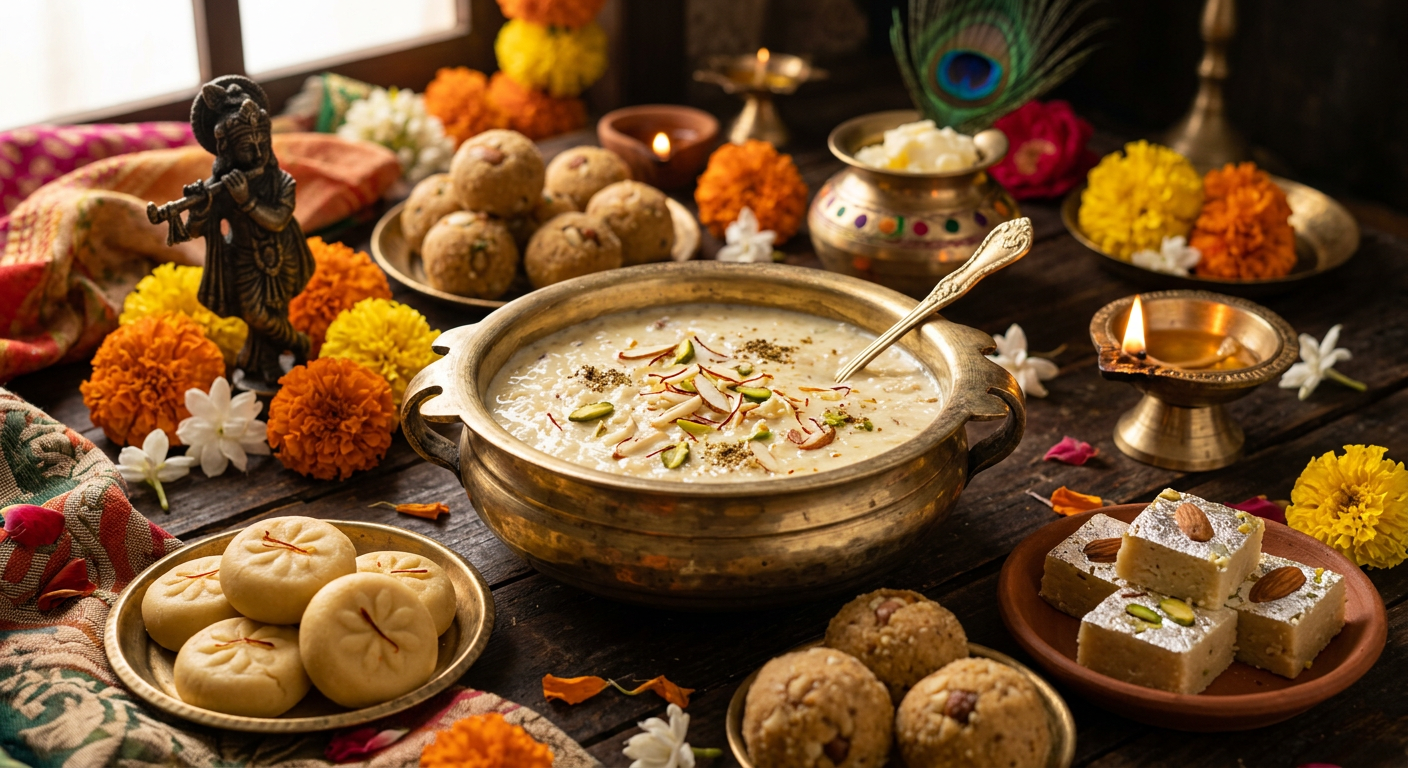
Pedas
Laddoos
Barfi
Sandesh
Other traditional sweets
Choose offerings according to your family tradition and the dietary practices followed during Janmashtami.
8. Makhana Preparations
Makhana is often used in fasting-friendly recipes.
It can be roasted or prepared in different ways depending on the ingredients permitted by the vrat tradition.
9. Coconut
Coconut is used in many Hindu worship practices and can be included in the puja offering according to family tradition.
10. Tulsi
Tulsi is not a food item, but it is traditionally associated with Vaishnava worship and is commonly offered with bhog in many Krishna devotional practices.
Janmashtami Bhog for Fasting Devotees
If you are preparing food for someone observing a Janmashtami vrat, the ingredients should follow the fasting rules they observe.
Possible fasting-friendly foods can include:
Fruits
Makhana
Milk
Curd
Nuts
Coconut
Certain root vegetables
Other foods permitted by the family's vrat tradition
Do not assume that every fasting devotee follows the same food restrictions.
How to Arrange Krishna Bhog
A simple presentation can include:
Krishna idol → flowers and Tulsi → bhog bowls → diya
Use clean serving bowls and keep food protected from dust, smoke and heat.
Traditional brass bowls and thalis can create an elegant presentation while also being reusable for future pujas.
Bhog vs Prasad
The terms are related but are not exactly interchangeable.
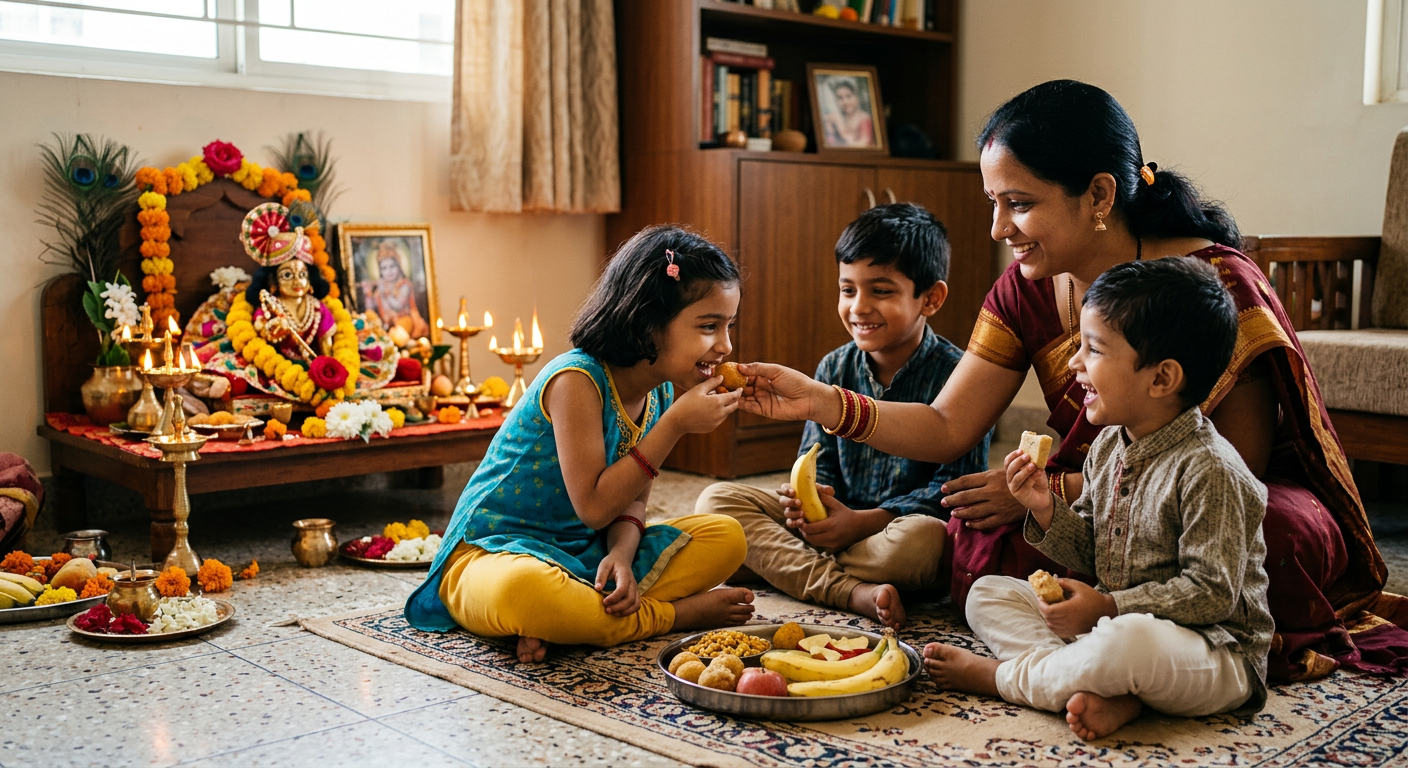
Bhog refers to food offered to the deity during worship.
Prasad refers to the sacred food or offering that is subsequently received and shared by devotees.
Usage can vary between traditions and communities.
Simple Janmashtami Bhog Menu
For a simple home celebration, you could prepare:
Makhan-mishri
Seasonal fruits
Panchamrit
Milk
One traditional sweet
One fasting-friendly savoury preparation, if required
You do not need a large menu to create a meaningful offering.
How to Make Janmashtami Bhog Special
The presentation can be simple but thoughtful.
Use:
A clean puja thali
Small serving bowls
Fresh flowers
Tulsi
Traditional brass utensils
A clean cloth beneath the offerings
Keep the food preparation and serving area hygienic.
Final Thoughts
Janmashtami bhog does not need to be complicated.
A bowl of makhan-mishri, fresh fruit, milk and a simple prayer can be enough for a meaningful home celebration.
Choose foods that fit your family's tradition, prepare them with care and share the offering respectfully as prasad.


